Special thanks to Summer Associate Carson Story for his research contributions to this article.
In our previous article, we explored the USPTO’s Supplemental Guidance for Examination of Design Patent Applications Related to Computer-Generated Interfaces and Icons and discussed how it expanded the range of GUI designs eligible for design patent protection. The Supplemental Guidance, effective March 13, 2026, expands the range of non-conventional GUIs eligible for design patent protection when the title and claim appropriately identify the interface as a design for a qualifying article of manufacture, like a computer or computer system. Although much of the attention surrounding the Supplemental Guidance has focused on projected, holographic, virtual reality, and augmented reality interfaces, the Supplemental Guidance also has immediate implications for more conventional GUI and icon designs, as shown by the prosecution history of recently issued U.S. Design Patent No. D1,140,959 (the D959 Patent).
The D959 Patent claims two embodiments of a “Computer Display Screen with Icon,” shown below.
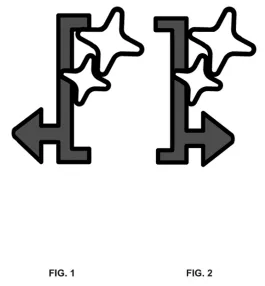
An application for the design was filed in December 2025. The application initially claimed “the ornamental design for computer graphic cursor as shown and described.” It included the following figures and a Specification describing Figure 1 as “a front view of a computer display screen with icon and graphic cursor, showing the new design” and Figure 2 as “another embodiment thereof.
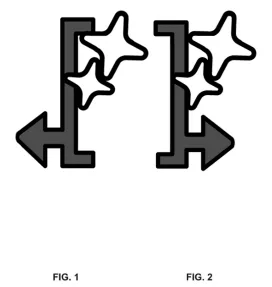
The USPTO rejected the claimed design under 35 U.S.C. § 171 as being directed to nonstatutory subject matter because the drawings did not clearly show an article of manufacture, which the USPTO understood to be a display screen (presumably based on the Figure 1 description). The USPTO also objected to the title “Computer Graphic Cursor” for not being directed to an article of manufacture.
The USPTO noted that the applicant could show a display screen in broken without introducing new matter to overcome the rejection and required the applicant to amend the title to “Computer Display Screen with Icon.”
In response—just nine days before the Supplemental Guidance was issued—the applicant replaced the figures with the following replacement figures, which added broken lines. The applicant also amended the title to “Computer Display Screen with Icon,” the description to describe the broken lines as showing unclaimed portions of a computer display screen, and the claim to “the ornamental design for computer display screen with icon as shown and described.”
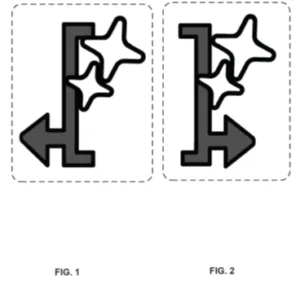
Two weeks after the issuance of the Supplemental Guidance, the applicant filed a Supplemental Response to replace the replacement figures with the following replacement figures, which removed the broken-line showing of a display screen.
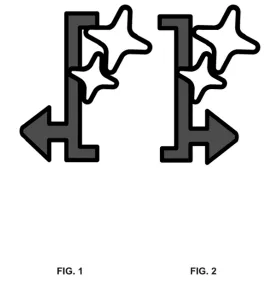
The USPTO then issued a Notice of Allowance allowing the claim and confirming the acceptability of the drawings filed with the Supplemental Response. Under the USPTO’s previous Guidance, the Supplemental Response would not have overcome the § 171 rejection because the accompanying replacement figures do not show a display screen in either solid or broken lines.
The patent demonstrates that the Supplemental Guidance applies to all design patent applications, including those filed before the Guidance’s effective date. The patent also illustrates that drawings need not depict an article of manufacture in either solid or broken lines when both the title and claim properly identify an article of manufacture.
More broadly, the D959 Patent demonstrates that the Supplemental Guidance is not limited to emerging projected, holographic, virtual reality, and augmented reality technologies. The Supplemental Guidance may also affect traditional GUI and icon applications by reducing the need to rely on drawings alone to identify the article of manufacture. As a result, applicants should revisit pending applications that received § 171 rejections based on the absence of a depicted article of manufacture, as the Supplemental Guidance may provide additional options for overcoming those rejections. Applicants may also wish to reevaluate whether showing a display screen or other article of manufacture in solid or broken lines remains necessary to achieve their desired claim scope, and whether amended titles, claims, or figure descriptions could better support their protection strategy. Together, these developments underscore the growing importance of carefully drafted titles, claims, and descriptions, which may now play a more significant role in defining the claimed design and its associated article of manufacture while providing applicants with greater flexibility to pursue meaningful protection for a wider range of digital interface designs.
Conclusion
The D959 Patent provides an early example of how the Supplemental Guidance is affecting the examination of GUI-related design applications. Applicants should review pending applications to determine whether the Supplemental Guidance provides opportunities to overcome prior Section 171 rejections, reconsider the use of depicted articles of manufacture, and refine titles, claims, and descriptions to support their desired scope of protection. For any questions about the new guidelines, please contact the authors of this article.
This article is the third installment in the Protecting Software with GUI Design Patents series.
Related Services
Receive insights from the most respected practitioners of IP law, straight to your inbox.
Subscribe for Updates