2026 Summer Associate Riley Smith contributed to this article.
Building a new brand often requires significant time and effort before a product or service ever reaches the market. Intent-to-use (ITU) trademark applications can help protect that investment by securing an early filing date in a mark—potentially giving ITU applicants priority over later adopters of the same or a similar mark, even if those parties commence use first.
But, as the USPTO’s Trademark Trial and Appeal Board (TTAB) recently emphasized in its Nike, Inc. v. Blue Ribbon Team decision (Opposition No. 91269520 (May 29, 2026)), ITU applications are not a vehicle to “reserve” rights in a mark for purely speculative future use. Rather, they must be grounded in a genuine (bona fide) intent to use the mark in commerce for the identified goods or services when the ITU application is filed.
This case began with Blue Ribbon Team’s (BRT) December 2019 ITU application to register the mark (BLUE RIBBON TEAM & Design) for online retail services across dozens of product categories, including sporting equipment and accessories.
Only a few weeks later, Nike filed its own ITU application in January 2020 for the mark (BLUE RIBBON SPORTS & Design) for bags, footwear, apparel, and retail services – which the USPTO suspended based on BRT’s prior-pending application.
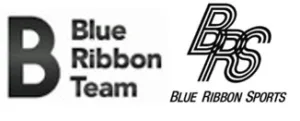
If you, like us, didn’t know, Nike was originally named “Blue Ribbon Sports,” and claims common law trademark rights in that mark dating back to the 1960s. In response, Nike opposed the BLUE RIBBON TEAM application on the grounds that BRT lacked a bona fide intent to use its applied for mark in commerce at the time of filing. In other words, Nike argued that BRT had no concrete plan to use the BLUE RIBBON TEAM mark for online retail services, a statutory requirement, when it filed the ITU application warranting its rejection.
To support its action, Nike pointed to BRT’s failure to produce documentary evidence of any concrete business plans, operational steps, sales or advertising activity, or intended retail locations, under the BLUE RIBBON TEAM mark at the time it filed the application. Although BRT did provide its business’ Articles of Incorporation, the Board found that documentation insufficient because it shed no light on the nature of the business or how the mark would be used. The Board found unpersuasive BRT’s explanation that it was waiting for the opposition proceedings with Nike to conclude before proceeding with business development, particularly in light of deposition testimony confirming an absence of concrete steps toward launching the proposed services and a lack of relevant business experience.
This decision serves as a pointed reminder that ITU filings should not be treated as a “cart-before-the-horse” approach to trademark registration. A bona fide intent to use a mark requires more than a subjective belief or vague future plans, it must be objectively supported by evidence showing a firm and demonstratable plan to use the mark in commerce, and that plan should be firmly in place prior to filing.
Potential ITU applicants may consider the following practical tips to substantiate bona fide intent to use a mark prior to filing:
- Business documentation remains one of the strongest forms of evidence. Applicants should maintain and preserve materials evidencing business development, particularly those that predate filing. Even informal or iterative documents can be probative, as they reflect ongoing planning and progress – so emails, draft plans, and preliminary agreements should be retained. Applicants should especially preserve:
- Business plans ideally containing substantive detail and actionable components (high-level descriptions alone may be insufficient)
- Generic business documents (i.e. Articles of Incorporation) are unlikely to carry weight unless they show how the mark will be used
- Operating plans, including planning related to vendors, suppliers, or service providers
- Supply or distribution agreements
- Lease agreements
- Sales projections or early sales data
- Advertising budget or expenditures
- Marketing strategies
- Evidence of commercialization efforts
- Outreach to third-party vendors or partners
- Soliciting quotes or proposals
- Testing platforms (Shopify, Amazon, etc.)
- Business experience in the field of the identified goods or services can also be an indicator of bona fide intent. While lack of experience in the relevant field is not dispositive, it may reinforce an inference of no bona fide intent, particularly where documentary support is sparse, as it did in Nike. Conversely, substantial experience in the field may help contextualize early-stage planning efforts and support a finding of genuine bona fide intent, even in the absence of formal documentation.
- Properly dating documents can be key. Materials that predate filing are often the most probative, as they show that the applicant’s intent existed at the relevant time rather than being developed in hindsight. At the same time, post-filing documents can corroborate continuity of effort, showing that the applicant’s plans progressed in a commercially reasonable manner rather than remaining speculative or abstract.
- While emails and other electronic documents are typically timestamped automatically, applicants should adopt similar practices for physical or informal materials. For example, routinely dating drafts or memorializing oral discussions in follow-up correspondence (e.g. “as discussed in our June 12 call…”).
Ultimately, evidence of bona fide intent is strongest when tied directly to the goods or services identified in the application. Applicants should avoid overbroad identifications that are unsupported by concrete planning or preparatory steps. Careful recordkeeping of materials such as emails, draft agreements, development timelines, and evidence of third-party engagement is important. And where a business is still in its earliest conceptual stages, it may be prudent to delay filing until there is adequate contemporaneous evidence to substantiate a bona fide intent to use the mark in commerce.
Related Industries
Receive insights from the most respected practitioners of IP law, straight to your inbox.
Subscribe for Updates