As the aviation industry accelerates towards a greener future, biotechnology has emerged as a critical player in the development of sustainable aviation fuel (SAF). With global decarbonization targets on the horizon and billions of pounds in government funding at stake, biotechnology driven innovation is propelling SAF to the forefront of efforts to combat climate change. Biotechnology supports the SAF sector by providing the tools and solutions needed for SAF production.
At the same time, intellectual property (IP) plays a vital role in protecting biotechnology innovations, offering opportunities to recoup significant research and development investments and ensuring continued advancements in the field. As the SAF sector continues to expand, so too does the need for strategic IP protection of its underlying technologies. Companies that secure patents for their innovations are better positioned to safeguard their developments and establish a strong market presence in this growing industry.
The Aviation Industry and SAF
Amid rising concern over carbon emissions and their accelerating impact on climate change, the aviation industry has set ambitious decarbonization goals, including a commitment to achieve net-zero carbon by 2050[1],[2].
Meeting these targets will require significant public and private investment in the SAF sector and its underlying technologies, estimated at $19–45 billion[3].
Biotechnology is particularly vital in developing scalable, sustainable biofuels from diverse feedstocks such as algae, agricultural waste and even carbon capture technologies.
Biotechnology’s Role in SAF
Biotechnology innovations are transforming SAF production through cutting-edge bioengineering techniques.
From engineering microbes to produce biofuels, to utilizing synthetic biology for feedstock conversion and refining, biotechnology is critical in making SAF both viable and sustainable for aviation’s decarbonization efforts.
Key biotechnology applications driving SAF breakthroughs include:
- Algae-based biofuels: Algae’s rapid growth and high lipid content make it an ideal feedstock for biofuels, offering significant potential for SAF production. In 2024 alone, the US Department of Energy announced $20.2 million in funding for 10 university and industry projects to advance mixed algae development for low-carbon biofuels and bioproducts for use in sustainable aviation fuel[4].
- Genetically modified organisms (GMOs): Microorganisms can be genetically engineered to convert agricultural waste and other non-food biomass into biofuels, providing an environmentally friendly source of fuel. For example, researchers found engineering Pseudomonas putida for advanced biofuel production significantly supports a bioproduction process using renewable carbon streams[5].
- Synthetic biology: This advanced technology enables the design and creation of new biological systems or organisms to optimize biofuel production. LanzaX, for example, has a synthetic biology and strain engineering platform that supports the company’s SAF projects[6].
- Biocatalysts in refining SAF: Enzymes and other catalysts are being harnessed to improve the efficiency and sustainability of refining processes, making SAF production more scalable and cost-effective. Researchers have documented that cost-effective consolidation of waste biomass, combined with technically optimized biocatalysts, can enhance the production efficiency of biofuels[7].
The Patent Landscape: Biotechnology Patents in the SAF Sector
Patents play a crucial role in protecting the biotechnology innovations driving progress in the SAF industry. In exchange for disclosing their inventions, patent holders are granted a 20-year exclusivity period during which others may not make, use, or sell the invention without permission.
Such permission often takes the form of a license, which can generate revenue and help offset R&D costs.
Additionally, sharing useful technical information encourages further innovation. As biotechnology advances, patents are becoming essential for companies to protect SAF-related innovations and maintain a competitive edge.
Patent-protected areas of biotechnology innovation in the SAF sector include:
- Microbial fermentation technologies for biofuel production;
- Genetically engineered organisms for efficient feedstock conversion;
- Carbon capture and utilization (CCU) technologies for SAF;
- Biorefining processes to upgrade biofuels for aviation use.
Data Analysis: Trends in SAF Related Biotech Patents
To analyze the SAF patent landscape, Derwent™ Innovation was used to identify patents filed globally through 2024.
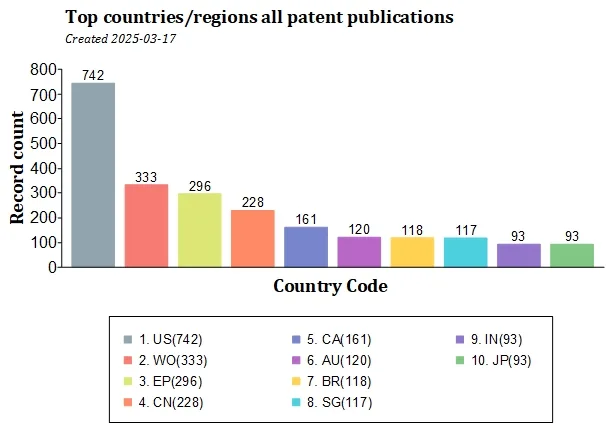
The search focused on sub-classification C10L and other key SAF-related terms[8]. A summary of findings is shown in Figures 1-3.
As Figure 1 illustrates, there has been a notable rise in patent filings related to SAF – especially in biotechnology driven fuel production – from the early 2000s through 2024.
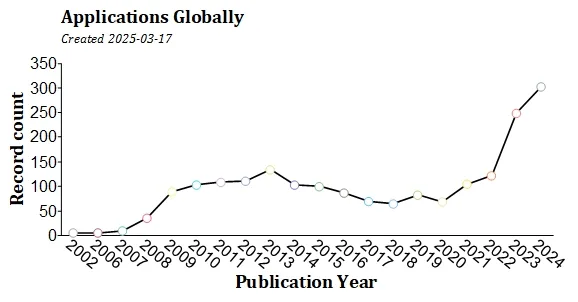
This surge reflects both growing recognition of the sector’s potential and the competitive advantages offered by strong patent portfolios.
While patent filings are increasing, a significant portion are held by a small number of entities.
As shown in Figure 2, Finnish oil refining company Neste holds over 300 SAF-related patents, while Honeywell UOP and TerraVia each hold nearly 200.
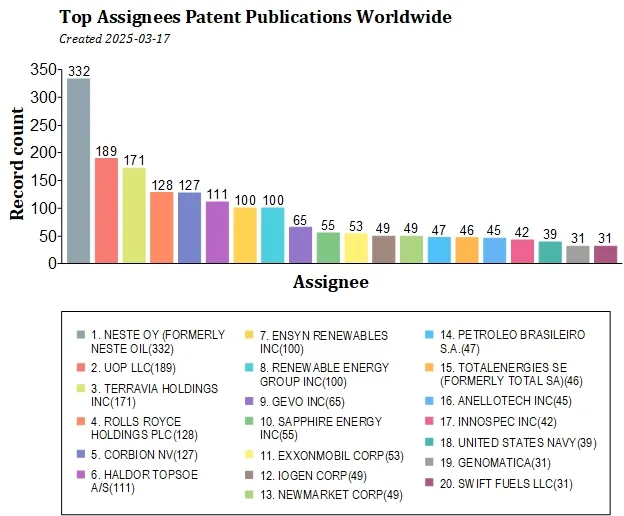
Five other entities each own 100+ patents, with the remainder distributed among other assignees.
Globally, as shown in Figure 3, the United States is the most common jurisdiction for SAF-related patent filings, followed by international (WO), European (EP), and Chinese (CN) applications.
Key Considerations in Biotech Patent Strategy for SAF
To attract investment and drive innovation, biotech firms in the SAF sector should prioritize IP protection. A sound patent strategy is essential to securing a competitive edge in this rapidly evolving market.
Firstly, companies should consider which types of patents best protect their innovations – for example:
- Composition of matter patents for engineered organisms, enzymes, or bio-based chemicals;
- Method of production patents for novel processes in biofuel or carbon capture technologies;
- Or a combination of both.
Secondly, firms should conduct a freedom to operate (FTO) analysis to identify third-party patents and inform strategies to commercialize, license, design around, or challenge existing SAF patents.
As Figure 1 shows, SAF patent activity is rapidly increasing, making FTO searches more crucial than ever.
The “Runway” Ahead: Scaling Biotechnology and SAF Patents
While biotechnology is paving the way for greener aviation, scaling SAF production still faces challenges, including feedstock availability, high production costs, and infrastructure demands.
To meet growing SAF demand, robust IP protection will be vital for biotech firms to maintain their competitive advantage.
Biotechnology patents not only protect innovations – they also support industry growth.
By securing exclusive rights, biotech companies can lead the SAF sector and help aviation meet ambitious decarburization targets.
References:
[1] U.S. Department of Energy. Sustainable aviation fuel. Alternative Fuels Data Center. Retrieved March 19, 2025, from afdc.energy.gov/fuels/sustainable-aviation-fuel
[2] International Air Transport Association. Fly Net Zero: Achieving net-zero carbon emissions by 2050. International Air Transport Association. Retrieved March 19, 2025, from iata.org/en/programs/sustainability/flynetzero/
[3] World Economic Forum. (2025). Financing sustainable aviation fuels: Case studies and implications for investment. weforum.org/publications/financing-sustainable-aviation-fuels-casestudies-and-implications-for-investment/
[4] U.S. Department of Energy. (2024, November 14). U.S. Department of Energy announces $20.2 million in projects to advance development of mixed algae for biofuels and bioproducts.energy.gov/eere/articles/us-departmentenergy-announces-202-million-projectsadvance-development-mixed-algae
[5] Banerjee, D. et al., “Genome-scale and pathway engineering for the sustainable aviation fuel precursor isoprenol production in Pseudomonas putida,” Metabolic Engineering, Volume 82, 2024, Pages 157-170, ISSN 1096-7176, doi.org/10.1016/j.ymben.2024.02.004.
[6] LanzaTech. (2025, January 21). LanzaTech to form new joint venture and launch spin-out of LanzaX business, and appoints interim CFO of LanzaTech.ir.lanzatech.com/news-releases/newsrelease-details/lanzatech-form-new-jointventure-and-launch-spin-out-lanzax/
[7] Parambath, J. et al., “Chapter 19 – Biocatalysts for biofuels production,” Bioenergy Engineering, Woodhead Publishing, 2023, Pages 409-425, ISBN 9780323983631, doi.org/10.1016/B978-0-323-98363-1.00005-3.
[8] The search should be viewed as indicative but not comprehensive.
 Download
PDF
Download
PDF
Related Industries
Related Services
Receive insights from the most respected practitioners of IP law, straight to your inbox.
Subscribe for Updates