2026 Summer Associate Riley Smith contributed to this article.
Imagine being blindfolded and dropped into an unfamiliar coffee shop. When the blindfold is removed, you see Tuscan-inspired wooden tables, soft lighting and earthy tones — and instantly recognize you are in a Starbucks, without seeing a logo or hearing the name.
Or, upon taking off the blindfold, you find yourself in a bright, open space defined by clean lines, light-toned wood, and carefully arranged, minimalist product displays. Even without branding cues, the environment unmistakably signals an Apple store.
These examples illustrate the powerful role interior design plays in branding. But as a brand owner, how do you protect the look and feel of your store, so that others don’t impinge on what makes your stores unique?
This article surveys the types of intellectual property available to protect interior design in the U.S. — trade dress, design patents, and copyright — and evaluates their respective strengths and limitations. A recent legal decision denying trade dress protection to a restaurant interior illustrates the challenges faced in protecting interior design.
This article highlights the hurdles interior designs must overcome to be eligible for protection, and explores how businesses may strategically choose or layer different forms of intellectual property protection to safeguard their brand.
Trade Dress Protection
Trade dress protects the overall look and feel of a product or commercial space, when consumers associate that appearance with a single brand. In the interior design context, this can include layouts, fixtures, lighting, color schemes, décor, or other design features that signal source in the same way a logo or product packaging would.
Trade dress can provide powerful and potentially perpetual protection, but obtaining it can be difficult. To qualify, an interior design must be distinctive and non-functional. In other words, the design must be recognized by consumers as identifying the brand — not simply reflecting common industry trends or operational needs.
In Two Pesos, Inc. v. Taco Cabana, Inc., the US Supreme Court in 1992 found that Taco Cabana’s trade dress — incorporating artifacts, bright colors, paintings and murals — was protectable on this basis.
But a May 2026 decision by the Trademark Trial and Appeal Board helps show what cannot be protected.
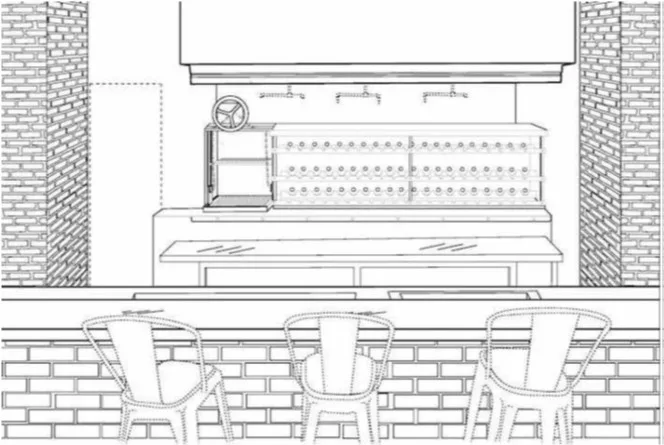
In re ETLC Trademarks, LLC, the Board found that a restaurant design lacked distinctiveness because many of the claimed features — brick walls, exposed prep stations, wood finishes, and industrial-style elements — were common in the restaurant industry, and thus did not act as identifiers that would distinguish the restaurant from its competitors in the eyes of consumers.
The Board also concluded that several features were driven by efficiency and workflow considerations, making them “functional” and ineligible for trade dress protection.
Strategy
Trade dress is often best suited for businesses with a well-established and consistent brand identity. A strong application focuses on the truly distinctive visual features of the space while excluding commonplace or operational elements.
Businesses should also actively build evidence of consumer recognition through consistent branding, advertising, media coverage, and long-term exclusive use. A business seeking to protect its interior design should consult legal counsel regarding a potential trade dress application with the U.S. Patent and Trademark Office.
While registration is not strictly necessary for protection, as “common law” trade dress protection vests upon use, obtaining a federal registration can provide valuable benefits — including a presumption of nationwide rights in connection with the services they provide (e.g., restaurant services), and a stronger foundation for enforcing rights.
Design Patent Protection
Design patents protect the ornamental appearance of a design as applied to an article of manufacture. Unlike trade dress, design patents do not require proof that consumers recognize the design as a brand identifier, making them significantly easier and faster to obtain.
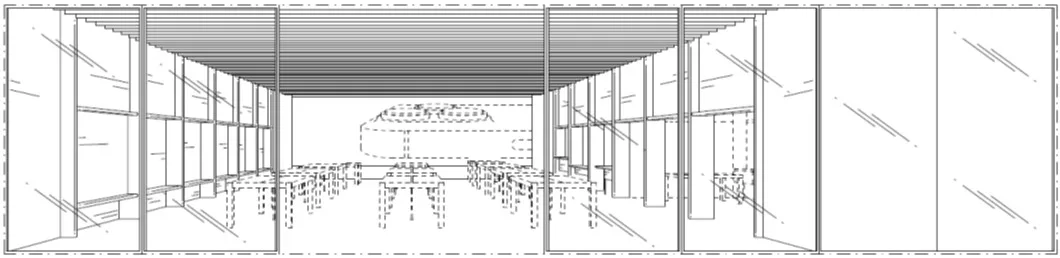
For interior design, design patents may cover anything from furniture and fixtures to staircases, lighting arrangements, or even an overall room configuration or building. Protection lasts fifteen years from issuance and protects against the use by others of substantially similar designs.
Design patents are particularly useful at the time that new features or a new look for a store is being developed. This is because — unlike trade dress — a design patent application should be filed before the design is made public. If not, in the US there is a one-year grace period in which an application can still be filed, but this doesn’t apply in all countries.
Also different from trade dress, design patent protection does not require years of consumer recognition. It also avoids many of the hurdles associated with trade dress, such as proving secondary meaning. A design patent can usually be obtained quite quickly, which can make design patents more useful for stores that frequently refresh their look.
That said, design patents still require the design to be new, ornamental, and non-obvious. Broad design concepts — such as “industrial chic” or “minimalist luxury” — cannot be monopolized, but a specific visual implementation of those concepts may qualify for protection.
In practice design patents can be a powerful tool for interior design. Protection begins upon issuance and lasts for 15 years.
And while exclusive use arising from a patent term alone does not establish distinctiveness, it provides time to develop consumer recognition — positioning the design for potential trade dress protection once the patent expires. Business owners may engage specialized legal counsel to help draft design patent claims and file applications for protection with the U.S. Patent and Trademark Office.
Strategy
For many businesses, design patents offer the most practical form of protection for interior spaces. Business owners are often best positioned when protecting a carefully curated combination of layout, fixtures, lighting, materials, and decorative features that individually or together create a distinctive visual impression.
Design patents can also complement a longer-term trade dress strategy by preserving exclusivity while consumer recognition develops.
Copyright
Unlike design patents, copyright protects creative expression itself rather than a design tied to a particular product. For example, a decorative pattern may be protected whether it appears on wallpaper, upholstery, or another surface. Although the duration of copyright protection varies, works made for hire — the category most likely to apply in this context — generally receive 95 years from publication or 120 years from creation, whichever expires first.
Copyright law, however, provides limited protection for interior design because it does not protect functional objects or arrangements. Furniture, lighting, and other fixtures are generally considered “useful articles,” meaning copyright protection extends only to separable artistic features, such as sculptural ornamentation or decorative carvings.
Overall interior designs can be difficult to protect with copyrights because they often combine common architectural features, furniture arrangements, and décor in ways courts view as standard, or functional, and ultimately insufficiently “original,” which is a prerequisite for copyrightability.
While Congress did extend copyright protection to architectural works in 1990, that protection primarily covers the structure and permanent architectural features of a building — not the overall atmosphere or decorative styling of an interior space.
Strategy
Copyright is generally most useful for protecting discrete artistic elements, such as murals, custom graphics, or sculptural décor, rather than the overall look and feel of a commercial interior. Even where protection exists, enforcement can be difficult because the copyright owner must prove actual copying of protected expressive elements.
Copyright protection arises automatically upon creation, so an owner need not register a work with the Copyright Office in order to acquire initial protection. Nevertheless, registration can provide substantial practical benefits by strengthening the owner’s ability to enforce their rights — and is relatively quick and inexpensive.
Comparing Different Forms of Protection
Trade dress, design patents, and copyright each protect different aspects of interior design, operate on different timelines, and require different evidentiary showings. In practice, these rights are often most effective when used together rather than viewed as mutually exclusive.
Trade dress offers the strongest long-term protection because it can potentially last indefinitely — but also may be the most difficult to obtain. Businesses must prove that consumers recognize the interior design itself as identifying their brand, and that the claimed features are not merely functional or commonplace within the industry.
As ETLC demonstrates, commonalities in restaurant and retail design can make this showing difficult, especially for newer businesses. Trade dress protection is therefore usually best suited for mature brands with a highly consistent visual identity and substantial evidence of consumer recognition.
Design patents, by contrast, may often be the most practical early-stage solution, and the best-suited to protect design updates. They do not require proof of consumer association and can provide meaningful exclusivity upon issuance.
For businesses launching or updating a distinctive restaurant, hotel, or retail concept, design patents can protect specific visual configurations and preclude competitors from adopting similar designs. They are particularly valuable where the business has invested heavily in a carefully curated visual environment but has not yet developed the marketplace recognition necessary for trade dress protection.
Design patents may also become increasingly important as businesses expand into virtual and immersive environments. Design patent protection can cover designs embodied in virtual spaces, graphical user interfaces (“GUIs”), and digital renderings.
For example, a business developing a virtual showroom, metaverse retail environment, or immersive branded experience may be able to obtain protection for specific visual configurations or interface designs.
As more commercial activity moves into digital and mixed-reality spaces, design patents may offer businesses an especially useful tool for protecting brands in virtual settings.
Copyright may be most effective as a “gap filler” or supplemental layer of protection for discrete creative elements incorporated into a space, such as murals, custom artwork, graphics, sculptural installations, or decorative surface designs.
From a practical standpoint, businesses should think about these rights temporally as well as substantively. A new business may begin by securing initial protection for their space via design patents, while simultaneously using the design consistently enough to build consumer recognition over time.
As that recognition develops, the business may later pursue trade dress protection for the overall commercial impression of the space. At the same time, individual artistic components may independently qualify for copyright protection.
Ultimately, each form of intellectual property offers something different to help safeguard interior design. The most effective strategy is often a layered approach that aligns legal protection with the commercial realities of branding, expansion, and long-term market recognition.
Originally printed in Westlaw Today on August 10, 2026. Reprinted with permission.
 Download
PDF
Download
PDF
 Read Full Article
Subscription Required
Read Full Article
Subscription Required
Related Industries
Receive insights from the most respected practitioners of IP law, straight to your inbox.
Subscribe for Updates